
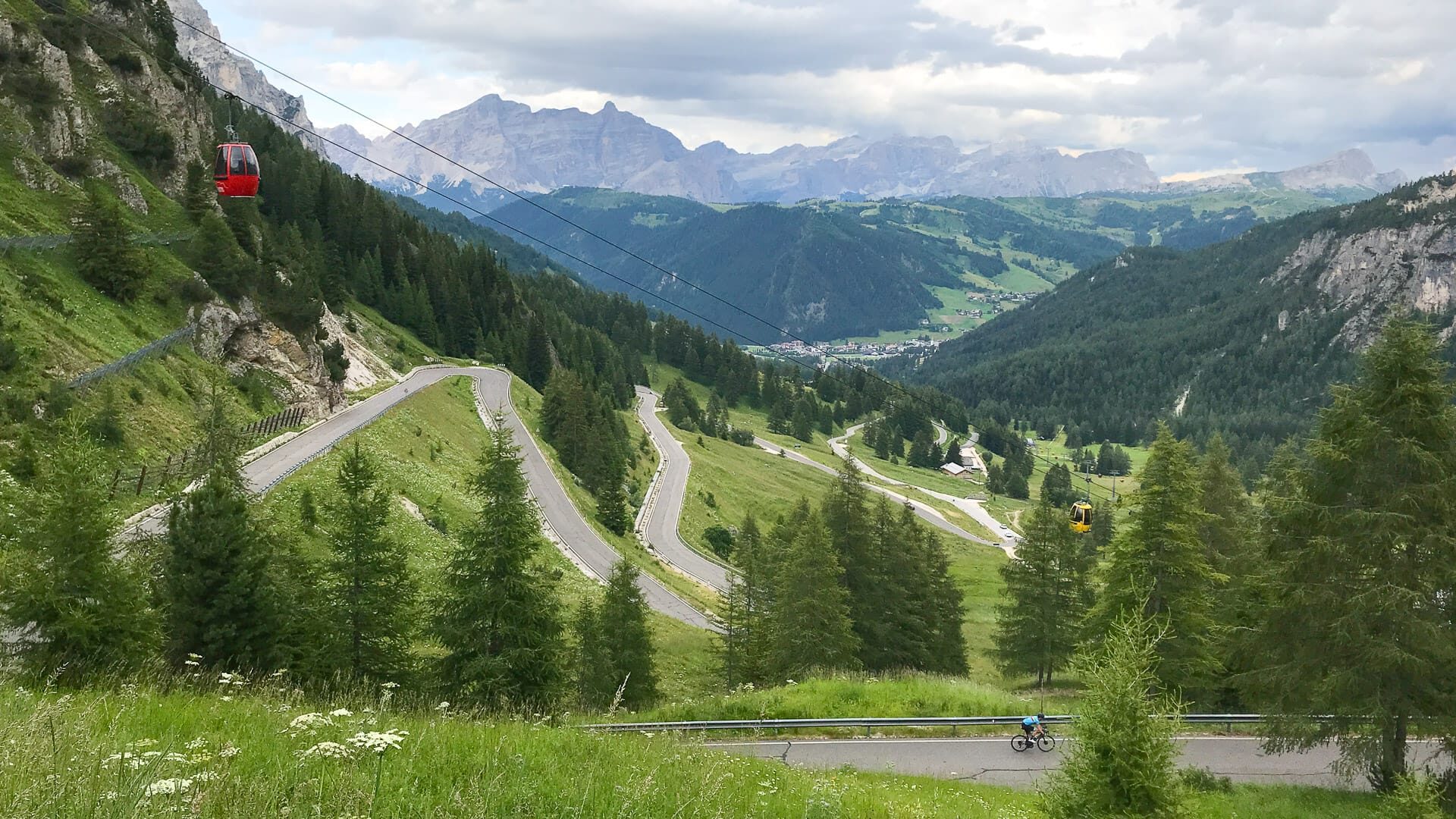
The Maratona dles Dolomites – Enel is one of the classic cycle events on the amateur gran fondo/sportive calendar. It takes place against the backdrop of the Italian Dolomites and provides participants the chance to pit themselves against a gruelling 138 kilometre route, incorporating dramatic mountain passes.
While the climbs are the headline challenge, they are only part of the Maratona experience. The event combines closed roads, exceptional scenery, a huge international field and a big-event atmosphere that takes over Alta Badia for the weekend. For many riders, the atmosphere is as memorable as the climbing.
We’ve ridden the Maratona route and written this guide to help anyone that’s thinking of entering, or has entered and is looking for more information on what the Maratona dles Dolomites event entails.
We’ve also picked the brains of some local experts to gather really valuable tips, which we’ve included throughout.
Clare Dewey is a cyclist with a passion for travel. She set up epicroadrides.com in 2018 to help make it easy for cyclists to explore the world by bike. Today her mission is still inspiring cyclists to discover new places on two wheels - and doing what she can to make sure they have the best possible time while they're there. Clare has visited 50+ destinations around the world, many of them by bike.
Want to connect with Clare? Find her over on LinkedIn.
This guide provides an overview of the Maratona dles Dolomites to be held on 05 July 2026. Please read the rules, entry conditions and information on the official website if you want to take part. In the event of any discrepancy between this guide and information on the official website, please rely on the official website. We are not the organisers of the event (nor are we connected with them).
Always check current travel information and advice. For visitors from the UK, the UK government travel information pages are here.
Table of contents
Part 1: Overview of the Maratona dles Dolomites
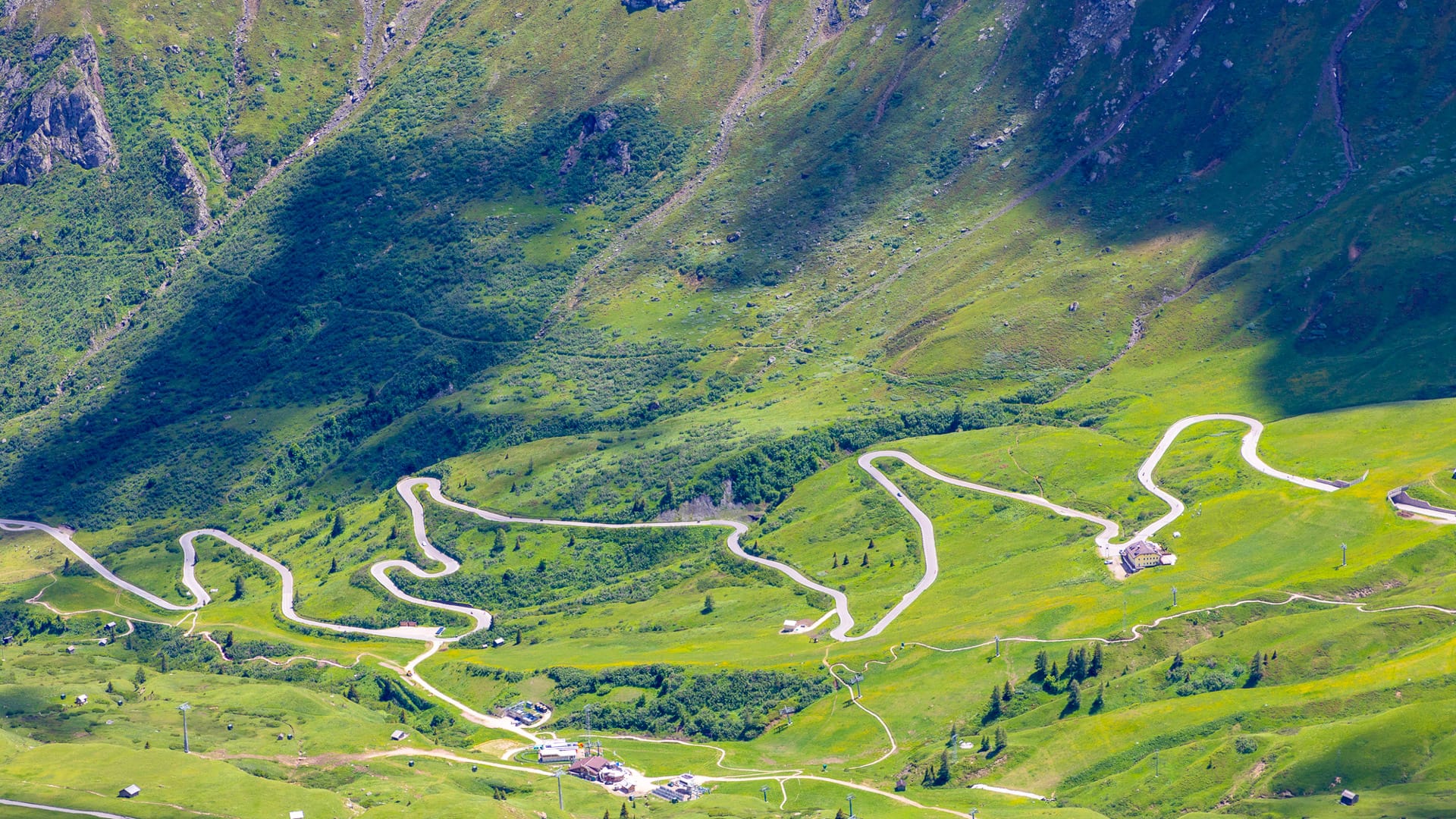
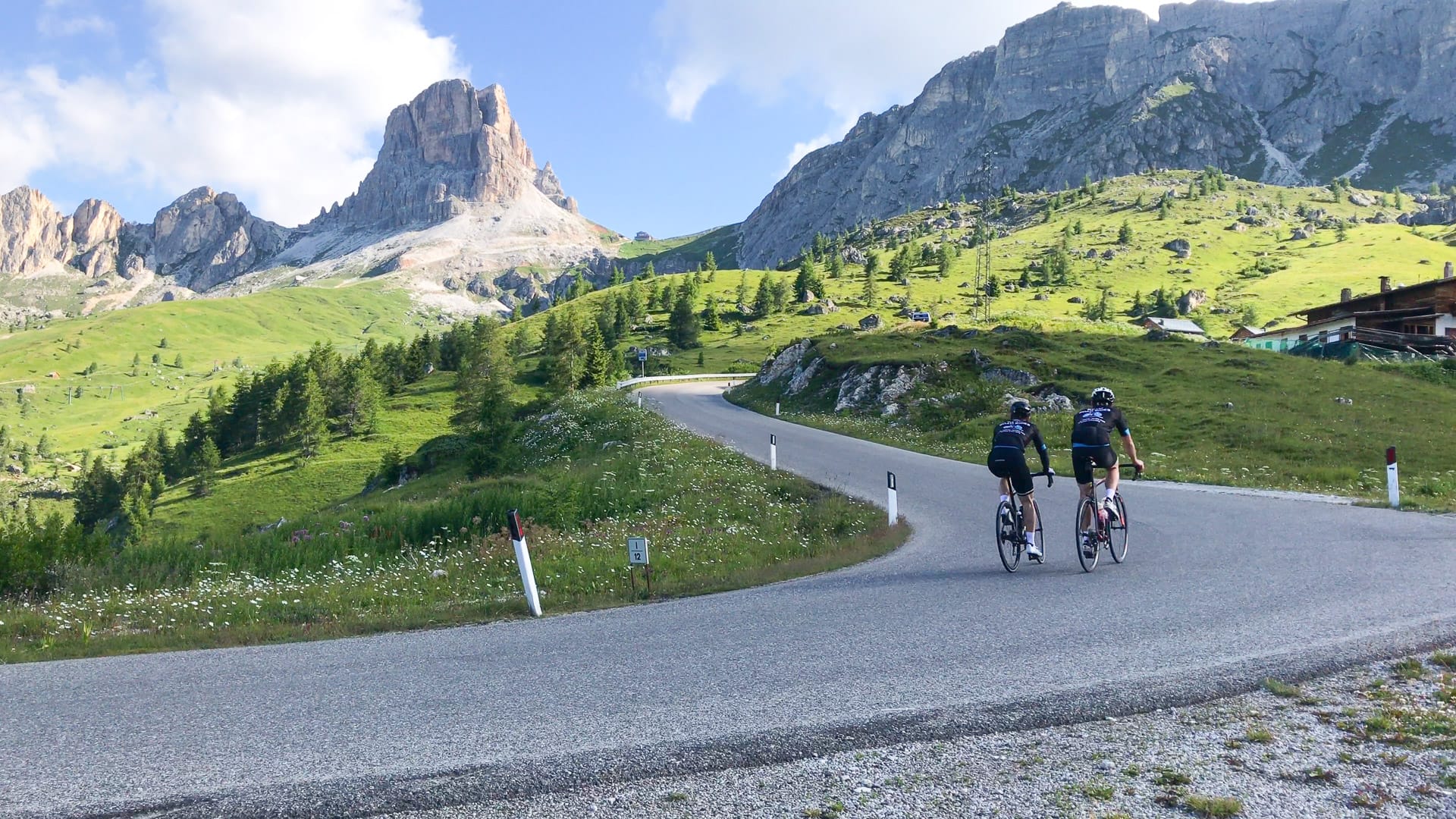
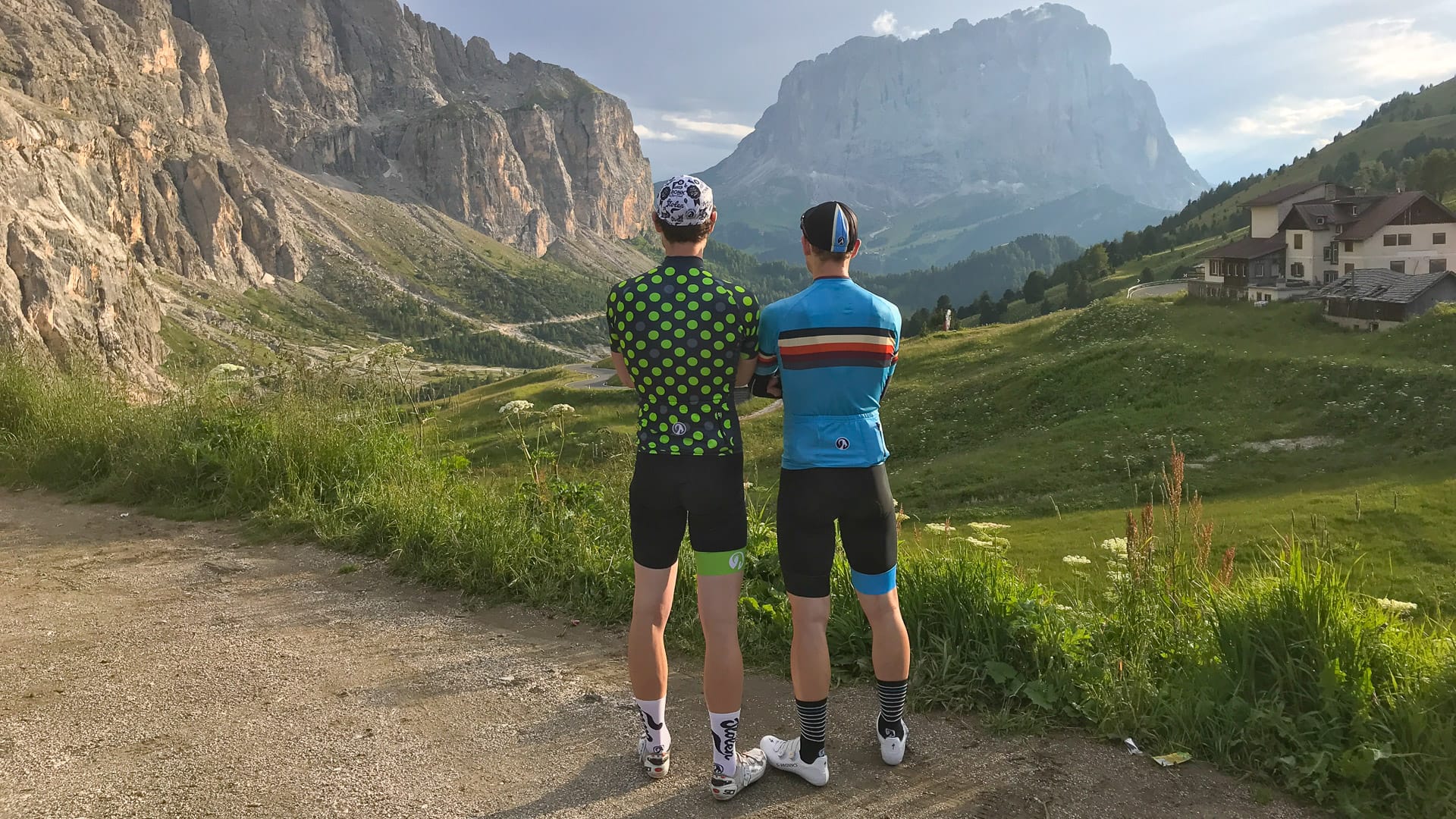
What is the Maratona dles Dolomites?
The Maratona dles Dolomites is an annually-staged, one-day road race which negotiates seven famous mountain passes in the Dolomites mountain range. The event is open to amateurs and is regarded as one of the best, if not the best, gran fondo in Italy.
The first edition took place in 1987 with just 166 participants. What began as a celebration of a local cycling club anniversary has since grown into one of Europe’s most sought-after amateur cycling events.
Maratona dles Dolomites when translated from the local Ladin language means “Dolomites Marathon’. As you’d expect in this mountainous part of the world, all the three routes are packed with elevation.
The National Geographic magazine once described the Maratona dles Dolomites sportive as ‘one of the biggest, most passionate and most chaotic races on Earth’.
Since its inception the race/granfondo has become one of the most important and sought-after amateur cycling events in Europe.
The 8,000 entry places are heavily oversubscribed and in 2025 participants from (reportedly) over 90 different nations competed in this event in the Alta Badia region.
In 2026, the organisers received around 32,000 applications for 8,000 places. This gives you an idea of how high demand is.
The course is lined with thousands of spectators and it is so popular that it is actually broadcast live by the Italian national broadcaster RAI.
The Maratona was first broadcast live on Italian TV in 2002 and has been broadcast every year since. This adds to the sense that the Maratona is not just a local sportive, but one of Italy’s major cycling occasions.
Despite that National Geographic quote, it has earned a stellar reputation as being very well organised and there are no less than seven refreshment/food stations on the course, all staffed by volunteers.
The whole area also embraces the event. Expect spectators, cowbells, music, fan zones and a strong local welcome. Corvara and the surrounding villages feel very different during Maratona week, with riders, supporters and event activity all gathering in the mountains.
Courses
The race starts in the small town of La Villa near Corvara and offers three courses –
- a short course (also known as the Sellaronda course) of 55 kilometres with four passes to navigate
- a middle course of 106 kilometres and six mountain passes; and
- the infamous long course over 138 kilometres incorporating eight passes.
The long course, also known as the Maratona course, includes over 4,000 metres of elevation gain and includes some very famous climbs, many of which are used in the Giro d’Italia.
In the order they appear on the course, the passes are: Passo Campolongo, Passo Pordoi, Passo Sella, Passo Gardena, Passo Campolongo (again), Passo Giau and the Passo Falzarego and Valparola.
One of the advantages of the Maratona is that you do not have to make your final route decision before you start riding. The course layout means you can make a call on the road, depending on how you feel and whether you reach the relevant cut-off points in time. This flexibility is especially useful if this is your first high mountain sportive.
Another reason the event feels so polished is that the route is established and familiar. The core course is the same each year, which means the organisers, local communities and returning riders know it extremely well. This helps create the smooth, well-practised feel the event is known for.
Why ride the Maratona?
One of the advantages of the Maratona is that irrespective of the course you have chosen everyone starts and finishes in Corvara. This means you can change your route at certain points of the course depending upon how you feel.
Another key benefit is the very fact that there are three courses to choose from; that’s not the case at all events. So, you can still participate in a gran fondo on one of the shorter routes and have the sense of completion that you get from that, even if you aren’t confident or experienced over longer distances.
The Maratona is also special because of the way the roads, villages and landscape come together. You are riding through a UNESCO World Heritage Site on closed roads, surrounded by some of the most dramatic mountain scenery in Europe. Add in the spectators, live TV coverage and early morning atmosphere, and it feels like much more than a standard sportive.
The road closures are a huge part of the appeal. Riding these famous Dolomites passes without normal traffic is a rare privilege and one of the reasons the Maratona has become such a sought-after event.
It’s also worth remembering that the Maratona is not just about the long route. The Sellaronda course may “only” be 55 kilometres, but it still includes around 1,780 metres of climbing and four major passes. It is short by gran fondo standards, but it is still a proper mountain challenge.
It is also the kind of event riders often want to return to. Some come back to improve their time, some return to try a longer route, and others come back for the atmosphere, scenery and chance to ride closed roads through the Dolomites again.
The Maratona dles Dolomites routes in more detail
There are three routes from which to choose when you enter the Maratona dles Dolomites:
- Sellaronda (short) course
- Middle course
- Maratona (long) course.
Sellaronda Course
The Sellaronda Course starts in the village of La Villa and finishes in nearby Corvara. The circular course travels clockwise around the Sella mountain chain and includes four mountain passes.
Soon after the start the ascent to the Campolongo pass begins. After crossing the summit of the Campolongo the road descends to the village of Arabba and then climbs the Passo Pordoi.
Riders then descend from the Pordoi into the Fassa valley and then start to climb the Passo Sella. After scaling the Sella, participants descend into the Gardena valley before taking on the final pass of the day – the Passo Gardena.
Everyone then enjoys the downhill section into Corvara.
- Total distance – 55 kilometres and 1,780 metres of elevation
- Don’t underestimate this route because of the distance. The Sellaronda is almost constantly up or down, with very little flat riding. It gives you the full Maratona atmosphere and the chance to ride Campolongo, Pordoi, Sella and Gardena without committing to the middle or long courses.
- For many riders, the Sellaronda is one of the best short mountain loops in Europe. It is also a route that some skiers may already know from winter trips to the area, which can make riding it by bike feel even more special.
Middle Course
Riders wanting to ride the middle course effectively complete the Sellaronda course. However, when they get to the Corvara finishing line, they continue.
For the second time in the day, they then take on the Passo Campolongo. This is followed by the same descent into Arabba.
Here participants take the road to the village of Cernadoi where the road splits and middle course entrants begin the ascent of the Passo Falzarego.
At the top of this pass, riders continue for another 80 metres to reach the top of the Passo Valparola. The road then goes back downhill into Corvara for the finish.
- Total distance – 106 kilometres and 3,130 metres of elevation
- The middle course is still a serious mountain ride. You miss out the Giau, but you still climb Campolongo twice and finish with the Falzarego and Valparola.
- It is a good option if you want a major challenge but do not want to take on the full 138 kilometre route.
Maratona Course
Riders taking on the epic long course split from the middle course in Cernadoi and, after taking on a small uncategorised climb of the Colle Santa Lucia, take on the fearsome Passo Giau.
This is where the long route changes character. By this point, many riders have already turned off for the short or middle routes, so the roads can feel quieter and the climb can feel more exposed. It also comes late in the day, when fatigue is already building.
The descent from the Giau takes these riders to the Falzarego and Valparola where they reunite with the middle course riders. Having crossed the Valparola they descend back to Corvara for the finish.
- Total distance – 138 kilometres and 4,230 metres of elevation
- The Maratona long course is a huge undertaking and completing it is a major achievement.
- The Giau tends to dominate people’s thoughts before the event, but don’t forget what comes afterwards. You still need to get over the Falzarego and Valparola before the final descent back to Corvara. Keep something in reserve.
Which mountain passes are on which of the Maratona dles Dolomites courses?
The Maratona dles Dolomites route is arranged around the seven mountain passes in the table below (in the order listed).
| Mountain Pass | Statistics | Short course | Medium course | Long course |
|---|---|---|---|---|
| Campolongo |
5.8 kilometres +353 metres 6.1% |
Yes | Yes | Yes |
| Pordoi |
9.2 kilometres +638 metres 6.9% |
Yes | Yes | Yes |
| Sella |
5.5 kilometres +436 metres 7.9% |
Yes | Yes | Yes |
| Gardena |
5.8 kilometres +250 metres 4.3% |
Yes | Yes | Yes |
| Campolongo (2) |
5.8 kilometres 353 metres 6.1% |
No | Yes | Yes |
| Giau |
9.9 kilometres +922 metres 9.3% |
No | No | Yes |
|
Falzarego/ Valparola |
11.5 kilometres +665 metres 5.8% |
No | Yes | Yes |
| Mür dl Giat | 370 metres +46 metres 12.4% 19% max |
No | Yes | Yes |
On the middle and long course, the Passo Campolongo is climbed twice. This means that there are four passes on the short course, six passes to climb on the medium course and seven passes to climb on the long course.
More about the mountain passes on the Maratona cycling route
Passo Campolongo
- Features as Maratona dles Dolomites climb number 1 and 5 (Corvara to Arabba).
- The Campolongo stands out because of its terrain, with sharp hairpins and (relatively) gentle straights. There are 13 hairpins in total on this pass, so be prepared!
- It is also the first climb of the day, so expect it to feel busy. The event starts in La Villa and begins climbing almost straight away, so there is little time for the field to spread out before the road tilts upwards.
- For more details, check out our Passo Campolongo ride guide (also here’s a GPX and Strava segment)
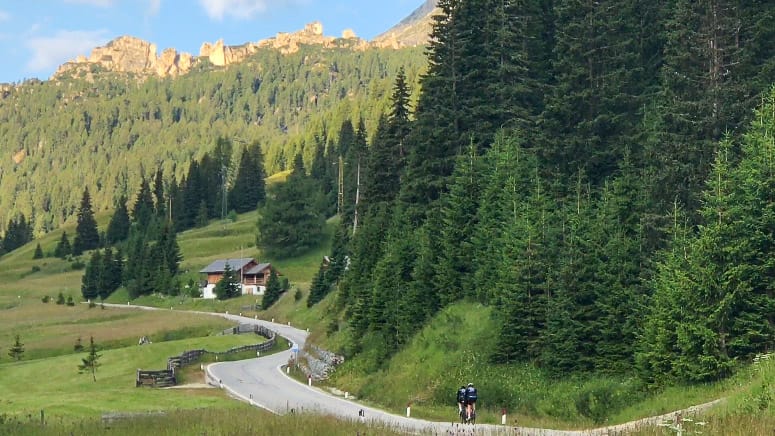
Peaceful climb through A pine forest on Passo Campolongo
Passo Pordoi
- Features as Maratona dles Dolomites climb number 2 (Arabba to Canazei).
- The Pordoi is a famous climb that has appeared in the Giro d’Italia 39 times since its introduction in 1940 (details here). Starting in the ski village of Arabba and rising in a straight line at an almost constant 7%, it has a total of 33 hairpins.
- For more details, check out our Passo Pordoi ride guide (also here’s a GPX and Strava segment).
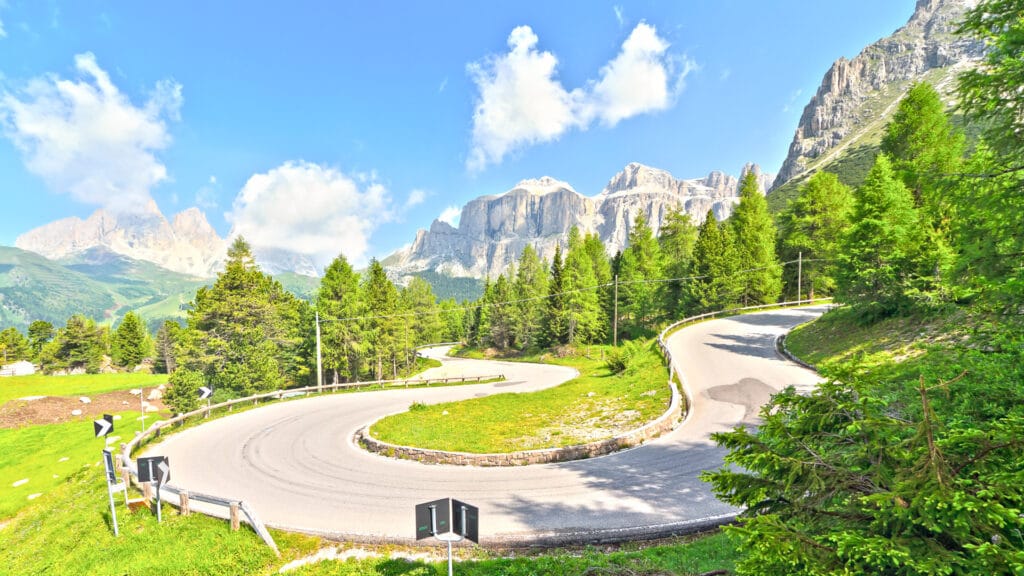
Winding ascent on Passo Pordoi
Passo Sella
- Features as Maratona dles Dolomites climb number 3.
- Passo Sella is a scenic climb: The Sella Massif walls surround you, creating an impressive riding experience. You’ll also get amazing views of the Marmolada Glacier as you reach higher altitudes. On the final hairpins you get your first glimpse of the Sassolungo group.
- For more details, check out our Passo Sella ride guide (also here’s a GPX and Strava segment).
Passo Gardena
- Features as Maratona dles Dolomites climb number 4
- The switchbacks towards the top of this climb are renowned for their views. On one side, you’ve got vertical peaks of the Sella. On the other, you have the Cier range. When you reach the top of the pass from Corvara, you are greeted with a completely new view of the Sassolungo/Sasslong mountains. Even seasoned cyclists say “wow”!
- The Gardena is also known for its atmosphere on event day. It is one of the places where you may find local spectators, music and cowbells helping riders through the climb.
- For more details, check out our Passo Gardena ride guide (also here’s a GPX and Strava segment).
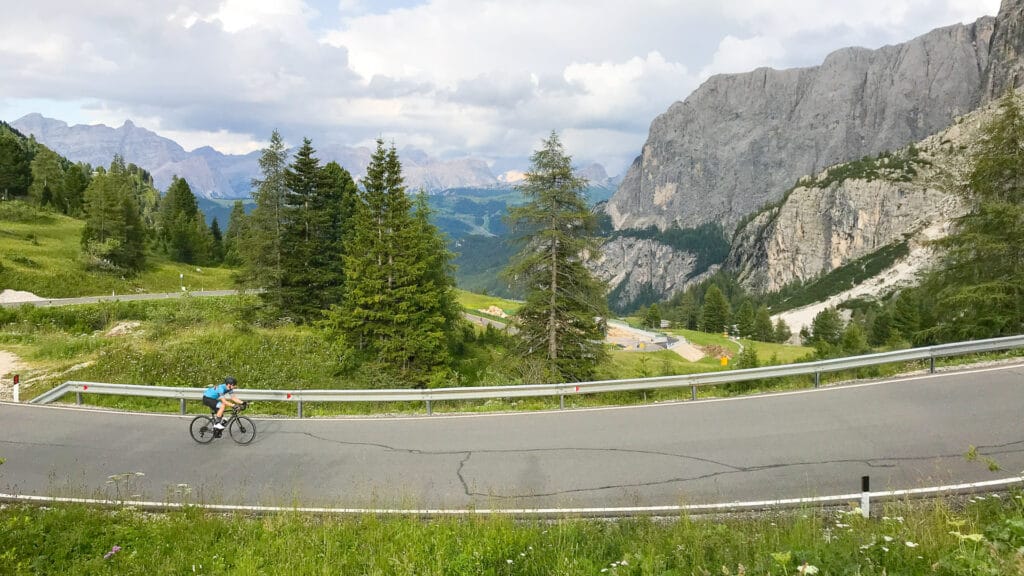
Climbing the bends of Passo Gardena
Passo Giau
- Features as Maratona dles Dolomites climb number 6 (Arabba/Selva di Cadore to Pocol)
- The Passo Giau is known by some as the beauty and the beast. It is tough and demanding, but it is considered by many to be the most impressive mountain pass in the Dolomites. It stands at an impressive 2,236 metres above sea level. The Giau features 29 hairpin bends and offers a relentless challenge of around 9% over a distance of 10 kilometres.
- The climb comes before the final Falzarego and Valparola section, so don’t empty the tank completely on the Giau.
- For more details, check out our Passo Giau ride guide (also here’s a GPX and Strava segment).
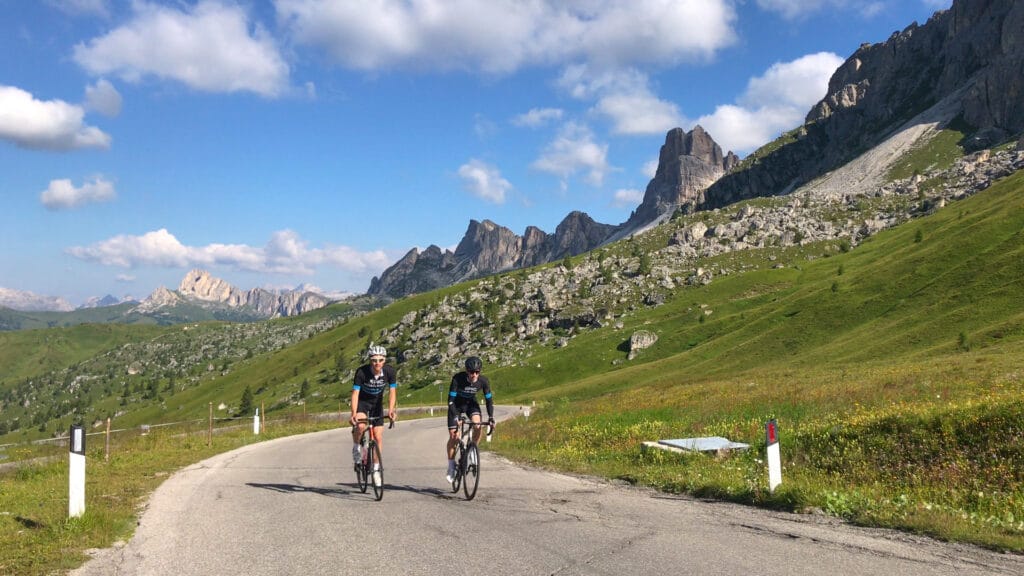
Riding high on Passo Giau
Passo Falzarego / Passo Valparola
- Features as Maratona dles Dolomites climb number 7 (and last)
- The Passo Valparola is the last climb of the Maratona dles Dolomites granfondo. It’s reached via the Passo Falzarego. This pass is beautiful, with its elevation reaching 2,192 metres. It starts from dense woodland and leads into a rocky landscape surrounded by towering mountains. The pass is also famous for its cycling history. People still talk about the epic battle on this pass between Fausto Coppi and Gino Bartali during the 1946 Giro d’Italia.
- Mentally, this final climb can catch riders out. The Giau gets most of the attention, but once you have crossed it, you still need to get over the Falzarego and Valparola before the descent back to Corvara.
- For more details, check out our Passo Falzarego ride guide (also here’s a GPX, Strava segment (Falzarego) and Strava segment (Valparola)).
Mür dl Giat
- If you are riding the middle or long course, be ready for the Mür dl Giat near the end of the route. It is short, at 370 metres, but it averages 12.4% and reaches a maximum gradient of 19%. With more than 100 kilometres already in your legs, it can feel far harder than it looks on paper.
- The good news is that it is also one of the most atmospheric parts of the event. It is a fan zone, with spectators, music and cowbells helping riders up the steepest slopes. Once you are over it, there are only around six kilometres to the finish.
How many people take part in the Maratona?
In the last edition in 2025 there were 8,000 riders, reportedly from over 90 different nations.
For the 2026 edition, the organisers received more than 32,000 participation requests.
Is there a Maratona cycling map and GPX routes?
Yes, all the details and maps of the routes can be found on the official website.
How does the Maratona course differ to the Sellaronda course?
It’s probably fair to say that the Maratona dles Dolomites 2026 route is for experienced cyclists used to endurance riding and climbing at altitude.
The Sellaronda route is more suited to someone who wants to take part in a challenging and prestigious event, but doesn’t fancy/hasn’t got the fitness for climbing so many mountain passes in one day.
That said, the Sellaronda should not be treated as easy. It may be 55 kilometres, but it still includes four major passes and nearly 1,800 metres of climbing. It is a short mountain route rather than a gentle option.
For those in between the two categories then there is the middle course!
Is the Maratona a race?
The vast majority of participants enter the Maratona merely to test themselves both mentally and physically against the rigours course. However, it’s worth knowing that a small percentage of the field will actually be racing for the kudos of being that years’ champion.
The front of the field is competitive, but for most riders the Maratona is best thought of as a challenge ride rather than a race. The atmosphere is supportive and sociable, with riders coming from around the world to enjoy the closed roads, scenery and shared experience.
In some ways, the Maratona feels like a major city marathon for cyclists. It brings together serious athletes, first-timers, returning riders and supporters, all sharing the same roads and the same event atmosphere.
Part 2: Entry and registration
How do you enter the Maratona dles Dolomites?
Entry is by the official website.
Spaces are very limited and there is huge demand – there are only 8,000 competitor spaces for 2026, and only 4,300 of those are going to ballot. The remaining 3,700 go to official tour operators, invitations, and other special categories.
There were more than 32,000 participation requests in 2026, so the ballot is highly competitive. If you are serious about riding, make sure you understand the entry dates and the options available through official tour operators.
Fidelity members are those who have completed at least 15 previous editions of the Maratona, and they can pre-register without going through the ballot process.
What’s included in the Maratona dles Dolomites entry fee?
Payment of the entry fee (160 euros for new 2026 entries) entitles participants to use the mechanical assistance and refreshments along the route, entry to the post-race pasta party, the official Maratona dles Dolomites jersey, a race number and free participation at all activities during the biker’s week. There’s also a 10 euro refundable deposit for the chip and a 10 euro non-refundable fee for a one-day licence. So you’ll pay 180 euros upfront, getting 10 back once you return your chip.
What is the cancellation policy for the Maratona dles Dolomites?
Read the official race conditions of entry carefully before you book.
Note the 2026 conditions of entry include a provision that “if the event has to be cancelled due to exceptional circumstances there is no refund of the entry fee but the organisation reserve the right to start in 2027 after completing the registration procedure as requested for coming edition”.
The terms go on to give examples of circumstances that would cause the cancellation of the event. It’s best you read the official conditions of entry document if you need the detail.
Are there Maratona cycling packages?
Yes, the Maratona works with official tour operators and provides them with guaranteed race entry packages.
This can be a useful option if you are not successful in the ballot, or if you want help with logistics such as accommodation, transfers, warm-up rides and bike transport.
Do you need a medical certificate for Maratona dles Dolomites?
The organisers of the Maratona dles Dolomites require a medical certificate signed by your GP as part of the requirements for entry. There is a required format that is published on the official website.
How do you get to the Maratona course?
If you are arriving by train, the closest major railway station is in Bolzano, which is around 100 km from Alta Badia. From here you can take a regional train to Brunico which is 40 km away, and from Brunico, there is a daily bus connecting to Alta Badia.
If you are flying then the closest airports are Bolzano (100km away), Innsbruck (130km away), Treviso (180km away), and Venice (200km away). All of these airports provide a rail connection to Bolzano.
You can also hire a car in Bolzano and drive along the SS12 and SS242 to Alta Badia.
While there are closer airports, local tour operators have said they find that most people travel to Venice Marco Polo Airport as this is the most connected airport in the region. Tour operators will typically run a shuttle service from here.
If you are flying with your bike, allow for the fact that many other riders will be doing the same. Airports can be full of bike boxes around Maratona weekend, so use clear labelling and make your bike box easy to identify. Some tour operators also offer overland bike transport, which can reduce the risk of airline bike delays.
There’s more travel information here.
Where’s the best place to stay to do the Maratona?
Many local experts believe that the Alta Badia area around Corvara is the best place to stay as it’s near the start and finish of the event.
If you wish to ride the popular Sellaronda route on another day you can do so easily from Corvara (in either direction).
See our detailed guide to the Dolomites area.
We’d suggest you focus your accommodation search on villages like La Villa, Badia, Corvara and Colfosco.
Bear in mind that accommodation is in high demand around event weekend. Alta Badia is made up of small mountain villages, so accommodation, restaurants, transfers and local services come under real pressure during Maratona week. Book early and don’t assume you can organise everything last minute.
Local hotels may also operate minimum-stay requirements during the event period, so factor this into your budget and travel plans. Many riders arrive on the Thursday, use Friday for registration and a warm-up ride, keep Saturday more relaxed, and then ride the event on Sunday.
What else do I need to think about before booking?
That’s kind of an open-ended question that will depend on your circumstances!
But we’d be checking things like FCO (your country’s equivalent) advice for travel, travel insurance, time-off work, flight/train availability and cost, accommodation availability and cost…
You should also think about bike transport early. If you are taking your own bike, decide whether you want to fly with it, drive it, or use a bike transport service if one is available through your tour operator. Maratona weekend is not the time to discover your bike has not arrived.

Mountain curves on Passo Pordoi
Part 3: The event
What time does the Maratona start?
The starting order is specified in the Conditions of Entry.
The first group, Group A, sets off at 6:30am on race day.
That means an early start and time waiting in your pen before you begin riding. It can feel fresh at that time of day, especially in the mountains, so think carefully about what you will wear or carry before the first climb.
Start pens are organised according to the official entry conditions, and the front groups are much faster and more competitive. Most riders will start further back, where the atmosphere is still busy but less race-focused. Check the official start group information before you travel.
How long does it take to complete the Maratona?
It will depend on your ability, but a time limit is imposed for finishers which is 1pm for the short route and 4.45pm for the middle and long course routes.
There are also intermediate cut-offs which are specified in the Conditions of Entry as follows:
“Corvara direction Campolongo (55 kilometres) 11.30am (after 11.30am the participant will be obliged to pass the finish line)
Cernadoi direction Passo Giau (76 kilometres) 11.50am (after 11.50am the participant will be obliged to continue along the middle course towards Falzarego)”
These times apply regardless of your starting time.
What are the service points during the Maratona?
Refreshments (and mechanical and medical assistance) from the event are guaranteed until the following time:
- Passo Sella 11.15am
- Passo Campolongo Midday
- Passo Gardena 12.15pm
- Colle S. Lucia 12.25pm
- Passo Giau 2.15pm
- Passo Falzarego 4pm
Is there any mechanical assistance during the Maratona?
Mechanical assistance is guaranteed until the times listed above.
However, the Maratona is a mountain route on closed roads, so don’t rely on immediate help appearing wherever you are. Carry your own basic repair kit and know how to fix common problems such as a puncture or dropped chain.
Is the Maratona a closed road sportive?
The FAQs on the official website states: “The roads will be closed to traffic (including cyclists) during most of the race. The closure timetable of the roads will be published as soon as the responsible authorities will confirm the times.”
The Conditions of Entry state “The Road closures are established by the various local prefectures and are guaranteed until the final race car marked as “fine corsa” has passed.”
Closed roads are one of the reasons the Maratona feels so special. They also mean the roads can be busy with riders, especially in the opening kilometres and on the first climb. Ride predictably, hold your line and give other cyclists space.
What is the atmosphere like at the Maratona?
Expect a big-event atmosphere, not just a standard sportive. There are helicopters overhead, spectators on the climbs, cowbells, fan zones and locals supporting riders from the roadside. Italian national TV coverage also adds to the sense that this is one of the country’s major cycling occasions.
It can feel closer to a professional race than most amateur cycling events, especially near the front of the field. For most participants, however, the best way to think about the Maratona is as a huge shared ride through the mountains rather than a pure race.
You may also see well-known riders, former pros or event ambassadors around the village and pasta party, which adds to the sense that the whole weekend is a celebration of cycling.
Do you need to be used to riding in a group?
It helps. The Maratona has a mass start and the opening climb of Campolongo can feel busy, especially if you are not used to riding close to other cyclists. Practise riding in a group before the event, hold your line, avoid sudden movements and be predictable.
It can also help to keep to the left or right-hand side of the road during the early kilometres, rather than getting boxed into the middle of the bunch. The start can feel intimidating, but the atmosphere is generally supportive and sociable once the field begins to spread out.
Use clear communication when passing, avoid cutting across other riders and remember that many participants are there to enjoy the day rather than race. A calm, predictable riding style will make the experience better for everyone.
What kit do you need for the Maratona?
Mountain weather can change quickly, even in July. You might experience warm sunshine, heavy rain and cold descents in the same weekend. At the time of writing, participants are required to carry a long-sleeved waterproof rain jacket for the duration of the event. Always check the latest official kit requirements before you travel.
Sunscreen, gloves, arm warmers and layers are also worth considering. It can be cool while you wait at the start, hot on the climbs and cold again on long descents or if the weather turns. A foil blanket or old warm layer can be useful before the start, provided you dispose of it responsibly or use an official bag drop if your tour operator provides one.
It is also worth having something warm available for after the finish, especially if you are waiting for friends or riding back to your accommodation. You may feel hot while climbing, but it is easy to cool down quickly once you stop.
Where can I find the Maratona dles Dolomites results?
All the results and placings for each year’s event can be found under the History tab on the official Maratona website.
Is it possible to get Maratona dles Dolomites photos?
The event photography is outsourced and in 2025 Sportograf provided this service.
A link on the official Maratona website links you to their site.
What are the rules of the event?
Here is the latest information regarding the 2026 event.
Make sure you read the official rules carefully before you travel. Pay particular attention to the required documents, kit requirements, medical certificate, licence requirements, cut-off times and road closure rules.
Is there much to do before/after the Maratona?
There is a ‘riders week’ ahead of the big event that we’ve heard good things about. Prior to that, there is the popular Sellaronda bike day which is a closed road cycling event that incorporates the passes of Gardena, Sella, Pordoi and Campolongo.
There are other planned ‘leisure’ rides in the area throughout the week including exhibitions and cycle related shows.
On the day before the Maratona there is a mini sportive for children and a musical festival at the Maratona village.
For 2026, the important dates are
- 6th July 2026 and 12th September 2026: Sellaronda Bike Day
- 20nd June 2026: Dolomites Bike Day
- 29th June – 5th July 2026: Rider’s Week
- 4th July 2026: Maratona for kids by Sportful
You can check the event deadlines here.
Friday is a good day to visit the event village, complete registration and soak up the atmosphere before the roads get busy on event day. The Maratona village and surrounding towns can feel very different from a normal week in Alta Badia, with riders, supporters, media and cycling brands all gathering ahead of the event.
Saturday is worth treating carefully. Some riders use it for a short spin, but others prefer to rest, walk, take a lift into the mountains or enjoy lunch at one of the mountain restaurants. It’s a good chance to settle in, check your kit and avoid doing too much before Sunday.
The organisers work hard to make the Maratona feel like an event for riders, families and supporters, not just a race on Sunday. If you are travelling with non-riders, Alta Badia’s lifts, walking routes, restaurants and mountain viewpoints can help make the trip work for everyone.
It is also worth seeing the Maratona as part of a wider Dolomites cycling trip. Many riders use the days before or after the event to explore more of Alta Badia, ride additional passes or enjoy the area at a slower pace once race day is over.
If you visit, don’t miss our detailed guide to the Dolomites area which includes ride guides, information on where to stay, tips for cycling the area and more.
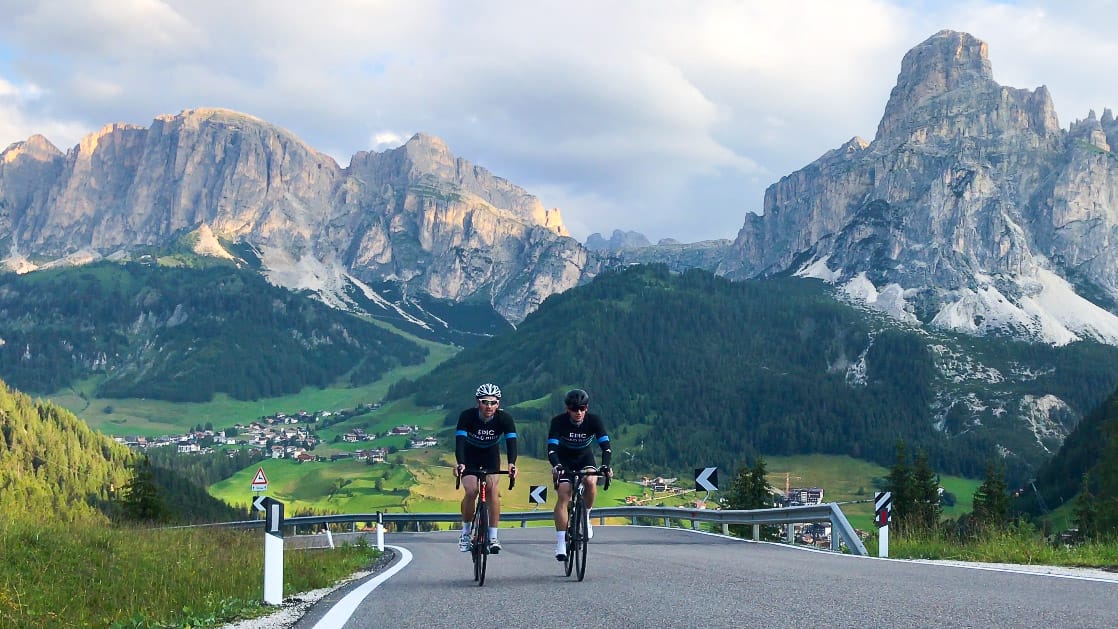
Climbing through alpine meadows on Passo Campolongo
What happens after the Maratona?
Your entry includes access to the post-race pasta party. This is a lively part of the Maratona experience, with riders gathering in Corvara to eat, drink and share stories from the day. Expect plenty of tired legs, happy faces and “war stories” from the Giau.
The post-ride meal is usually a relaxed, communal affair, with riders using the tokens from their race pack for food and drinks. Expect simple, filling post-ride food and a lively atmosphere rather than a formal meal.
The finish can feel surprisingly emotional. Riders who did not know each other at the start often end up swapping stories over food and drinks afterwards. Whether you rode the short, middle or long route, there is a real sense of shared achievement.
Corvara also has a strong post-ride atmosphere, with cafés, restaurants and bars filling up with riders and supporters. For many participants, this shared celebration is one of the things that makes the weekend so memorable.
Part 4: Top tips for riding the Maratona
To finish off with, here are some important tips to help you really make the most of this incredible event:
Wrap up warm for the start
Wrap up warm for the start of the race. You’re going to be starting at 6.30am and the temperature at the mountain summits can be quite cool too.
Remember that a long-sleeved waterproof rain jacket is now required for the event. Mountain weather can change quickly, so pack for sunshine, rain and cold descents.
You can always leave your warmer layers in your bag at the Sports Tour food stop. Or, consider buying cheaper warm layers from a charity shop before you head out, and then discard them at any of the official stops – they’ll be donated back to charity that way.
Train for climbing, not just distance
A weekly 100 kilometre ride is useful, but the Maratona is defined by repeated mountain passes and more than 4,000 metres of climbing on the long route. Build sustained climbing, descending and fuelling practice into your preparation.
If your legs are not used to long climbs, the Maratona will feel very different to a flatter sportive. Try to include long, steady climbs in your training, or use indoor sessions to build the effort if you don’t live near mountains.
Practise descending
The Maratona climbs get most of the attention, but the descents are fast and there are lots of riders on the road. Stay within your limits, hold your line and give other riders space.
The descents are part of the challenge. Don’t let the atmosphere or other riders push you into taking risks.
Carry your own repair kit
Inner tubes and CO2 air cylinders are the most commonly forgotten items when people pack. While Sports Tours will always have spares, it’s best to remember to bring your own too if you can.
Because the event is on closed roads, you’ll struggle to get mechanical help if you’re 10km past a stop. So, make use of the mechanics while you can at the official stops or the Sports Tour stop. And know how to do your own basic mechanics yourself.
Save some energy for the Mür dl Giat and the finish
Save some energy for the finish. While it might appear flat compared to the climbs of the rest of the event, it is uphill, and it’s not a short road! Make sure you have some legs and mental strength left to finish strong!
If you are riding the middle or long course, also be ready for the Mür dl Giat near the end. It is short, but brutally steep, and can feel much harder with more than 100 kilometres already in your legs.
The upside is the atmosphere. With fans, music and cowbells, it can be one of the most memorable parts of the whole route.
Fuel properly
The Maratona is a long day in the mountains, even if you are riding the short route. Make sure you eat and drink regularly from the start, rather than waiting until you feel hungry or low on energy.
The early climbs and big atmosphere can make it easy to get carried away. Keep your effort controlled and stay on top of your fuelling, especially before the Giau if you are riding the long route.
Think about bike transport
If you are flying with your bike, make sure your bike box is clearly labelled and easy to identify. Maratona weekend can mean lots of bike boxes travelling through the same airports at the same time.
Some tour operators offer overland bike transport, which can be worth considering if you want to reduce the risk of airline delays or bike handling problems.
Treat it as a ride, not just a race
It’s a tough event but it’s in the most incredible setting, so don’t forget to stop every now and then, look up, and actually soak up the views and the atmosphere. It can be easy to just have your head pointed at your handlebars throughout, so make sure to take it all in while you can.
Unless you are starting near the front and aiming for a result, the real value of the Maratona is the challenge, scenery and atmosphere. Enjoy the closed roads, the roadside support and the chance to ride through one of Europe’s most spectacular mountain landscapes.
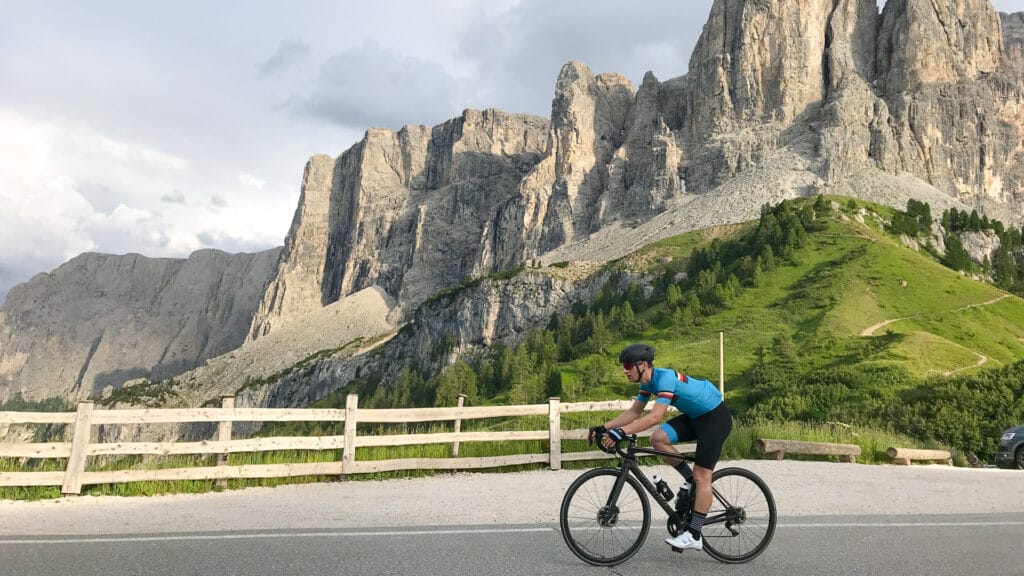
Riding below cliffs on Passo Gardena
Good luck!
Keep in touch and let us know how it goes!
We’d love to see your photos and hear your stories – comment below!
And, if you haven’t already, don’t forget to check out our ultimate guide to cycling in the Dolomites which includes guides to some of the best rides, plus info on where to stay and tips for riding this amazing part of Italy.
If you’re interested in other top European sportives, you might also like to check out our pick of the best here.
What’s next?
- 4 best cycling routes in the Dolomites, for tips on organising your own Dolomites cycling break.
- 16 tips to ensure the perfect Dolomites cycling holidays, if you want more tips on riding this region.
- Dolomites bike hotels if you want more help finding places to stay for the Maratona or for your self-organised trips.
Please support Epic Road Rides
A huge amount of time and effort goes into the article you’ve just read, all with the aim of helping you!
If you found what you’ve read useful, I’d really appreciate it if you dropped something in the tip jar here.
It’s a way you can say thank you and help us carry on creating top quality content with no annoying ads and no pay wall.
Looking for an organised cycling trip?
If you want someone to help you plan and book your cycling holiday, fill out this form. We aren’t a tour operator/agent but we work with lots of people who are and will do our best to put you in touch with someone that can help (within 24 hours where possible)!Clare Dewey is a cyclist with a passion for travel. She set up epicroadrides.com in 2018 to help make it easy for cyclists to explore the world by bike. Today her mission is still inspiring cyclists to discover new places on two wheels - and doing what she can to make sure they have the best possible time while they're there. Clare has visited 50+ destinations around the world, many of them by bike.
Want to connect with Clare? Find her over on LinkedIn.
Last Reviewed: 12 June 2026
First Published: 10 November 2023
The contents of this website are provided for general information purposes only. It is not intended to amount to advice and you should not rely on it. You should carry out your own due diligence and risk assessments and take professional advice. Views expressed by interviewees or other users of this website do not necessarily represent our views. We make no representations, warranties or guarantees, whether express or implied, that the content on our website is accurate, complete or up to date. If you use any information or content on this website, download from, or otherwise obtain content or services through our website, it is entirely at your own discretion and risk. Epic Road Rides Ltd disclaims all liability and responsibility arising from any reliance placed on the information and content on this website. Find out more here.
The correct name of the race is Maratona delle Dolomiti. It’s an Italian race, not French.