
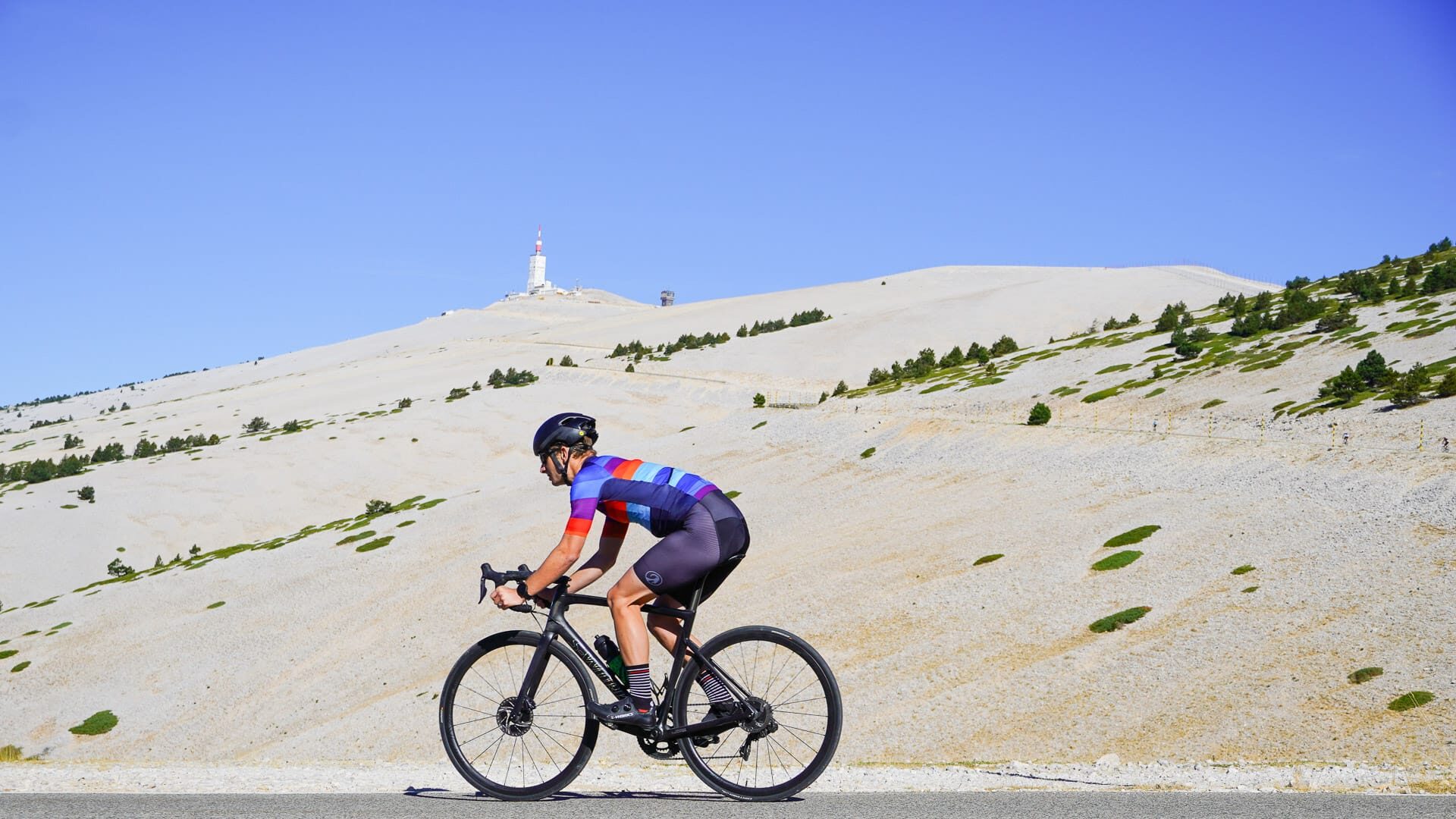
Cycling up Mont Ventoux should be a fantastic, bucket-list experience.
From the gradients and exposed summit to the changeable weather and fast descents, good preparation can make a huge difference to your day. Get it right, and Ventoux can be every bit as special as you hoped.
In this article, I share 19 essential tips for cycling Mont Ventoux based on my two visits to this infamous mountain.
Ready to find out more about cycling Mont Ventoux? Read on!
For routes, bike hire and everything else you might want to know about cycling Ventoux, read our ultimate guide! For where to stay, read our Ventoux hotels and accommodation article.
Clare Dewey is a cyclist with a passion for travel. She set up epicroadrides.com in 2018 to help make it easy for cyclists to explore the world by bike. Today her mission is still inspiring cyclists to discover new places on two wheels - and doing what she can to make sure they have the best possible time while they're there. Clare has visited 50+ destinations around the world, many of them by bike.
Want to connect with Clare? Find her over on LinkedIn.
Always check current travel information and advice. For visitors from the UK, the UK government travel information pages are here.
Preparation
1. (It sounds obvious but) you need to be fit to climb Ventoux by bike. If you haven’t trained, you are going to struggle. I also strongly suggest you practice descending hairpin corners before you arrive. The Mont Ventoux climb is not the place to learn.
For example, the most famous side of the climb is from Bédoin and the climb to the summit is around 21.5 kilometres with roughly 1,600 metres of climbing, so this is a ride worth training specifically for. If you do not have access to long climbs at home, indoor sessions and repeated climbing efforts can help you prepare for the sustained effort.
2. Bring the right kit. At an absolute minimum, you will need arm warmers, leg warmers and a windproof jacket for the summit. Even in summer, conditions at the top can feel very different to Bédoin, Malaucène or Sault. You may set off in sunshine and still need warm layers for the final kilometres and descent.
If the weather looks bad, pack and dress accordingly. For packing lists, click here.
3. Leave your deep section wheels at home. If it’s windy at the top of Ventoux, you’ll be happy you chose wheels less prone to being caught by gusts of wind.
4. Make sure your gearing is suitable before you arrive. If you aren’t a wiry climber, use a compact chainset or generous climbing gears. This can make the difference between surviving the climb and enjoying it, especially if you are climbing from Bédoin or Malaucène, where the gradients are more sustained.

Cycling Ventoux is not for beginners
Routes
5. Plan your route before you visit. There are three classic paved ways up Mont Ventoux: from Bédoin, Malaucène and Sault. Each offers a different experience, so it is worth choosing the route that best fits your fitness, confidence and plans for the day.
Bédoin is the classic and best-known ascent, while Malaucène offers a broadly similar challenge in terms of distance and profile. Sault is a couple of kilometres longer but generally shallower, with some flatter sections offering welcome respite. It joins the Bédoin road at Chalet Reynard, and the two routes then share roughly the final six kilometres to the summit.
Our ultimate guide to cycling Ventoux contains loads of information on each of the three ways up: via Bédoin, Malaucène or Sault.
6. Expect traffic, especially in summer. The road is relatively narrow in many places and is popular with cars, motorbikes, campervans and other cyclists. Ride predictably, hold your line and avoid drifting across the road when the gradient bites.
7. Milestones every kilometre show:
- the average gradient for the next kilometre and the number of kilometres to the summit; and
- the current altitude.
They are useful for pacing, though they can also feel a little brutal when the next kilometre is steep!
Also be aware that there are no markets on the Sault route.

Markers on the way up Ventoux from Bédoin
Best times to cycle Ventoux
8. An important part of cycling Ventoux is the notorious weather. The banner photo for this article was taken on one of our rides up Ventoux in early summer – but so was the photo below…
Late May through to September is the best window to aim for when planning a Ventoux climb. Even then, the Mistral can affect the mountain at any time, so travelling in summer is no guarantee of calm conditions.
9. Keep flexible on your Ventoux day. More on this below, but bear in mind that it can seem fine at the bottom, even though there’s thick fog and a cold wind further up. If you have any flexibility over which day you ride Ventoux, pick a day when the summit is clear, and weather reports are favourable.
If you are spending several days in Provence, it is worth keeping your Ventoux day flexible. Save the climb for the best wind forecast and have another local ride in mind if conditions on the mountain are poor.
10. Mont Ventoux is open between mid-April and mid-November from Bédoin, though it can be shut at any point throughout the year if the weather is bad. The roads (or just sections, e.g. the summit) can also be shut if there are maintenance works or events such as motor races. If you are planning your trip around riding Ventoux, do some digging on events on Ventoux. Check the official access information before you travel and again before you ride.
In strong winds, access can be restricted above Chalet Reynard, where the road becomes much more exposed. Being able to ride the lower slopes does not necessarily mean the summit will be accessible.

Descending Ventoux on a hot day
Weather
11. Check the forecast the day before your ride and again before you set out. You can check the current temperature at the summit and windspeed and direction here. If the wind looks very strong then choose whichever route that will mean it is mainly behind you (e.g. if the wind is coming from the northwest, don’t do the Sault route). The wind gusts over 50 mph 200 days a year on Ventoux!
Pay particular attention to the wind forecast above Chalet Reynard. The Mistral can occur throughout the year and may be more persistent earlier in the season, while summer spells can be shorter and more localised.
12. Don’t underestimate the conditions on the summit, even in good weather, and/or when all is calm in Bédoin. The summit and the descent are very exposed and, as far fetched as it sounds, people are frequently blown off their bikes. If you want to see a Mont Ventoux webcam before you set out, try this.
From Bédoin, this contrast can be particularly deceptive. The long forest section can feel enclosed and almost completely sheltered from the wind, before the road emerges onto the much more exposed upper mountain.
13. It if rains, gravel and debris may get washed onto the road. Fog can also make things tricky especially on the descent. In summer, the heat can be intense, so set off early, carry enough fluid and refill where you can.
Chalet Reynard is also a useful place to pause before the final exposed section. If conditions deteriorate while you are descending, it can provide somewhere to stop before continuing down the mountain.
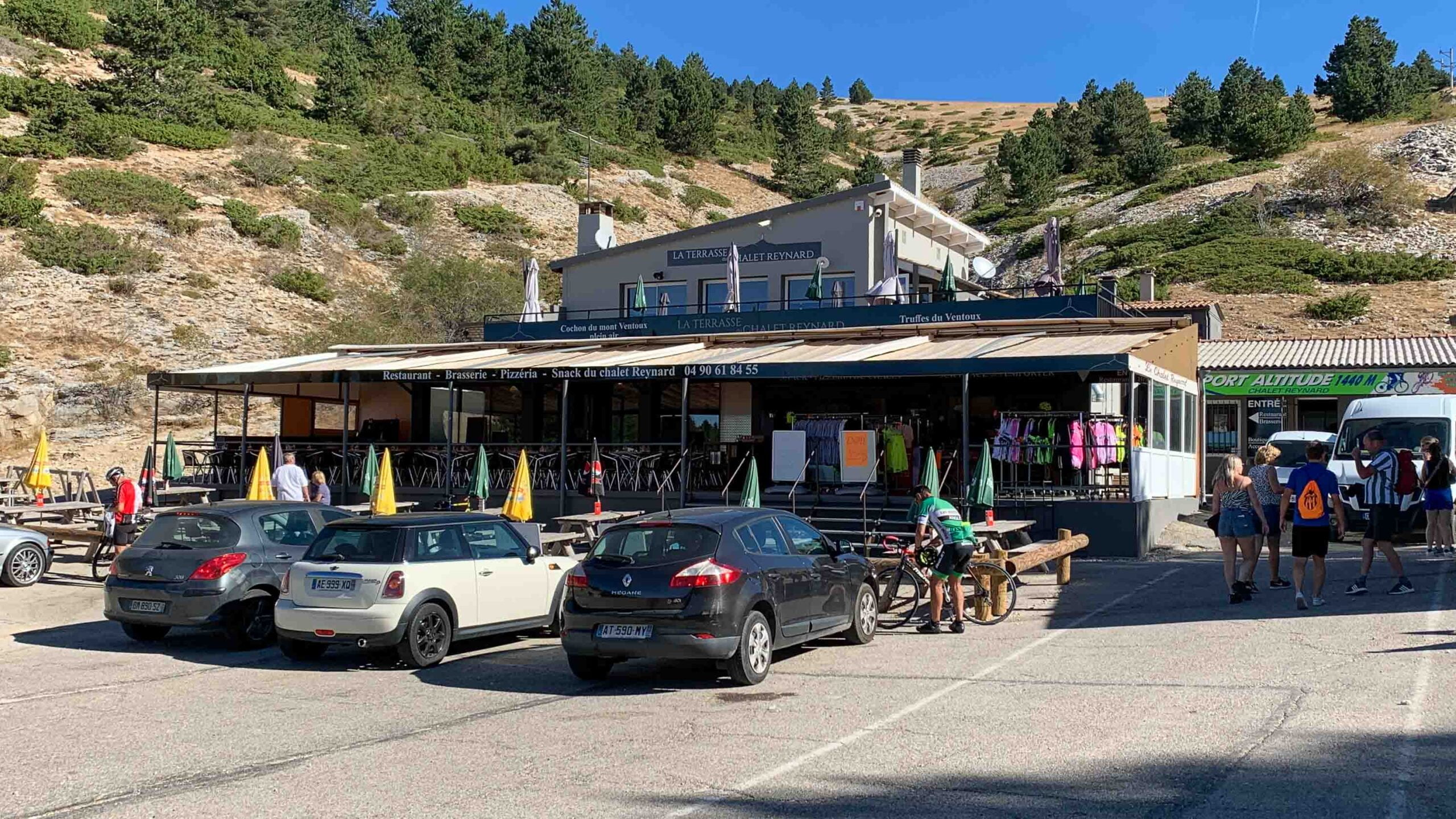
The famous Chalet Reynard
Other stuff for cycling up the Mont Ventoux climb
Tips for the summit
14. Get your extra layers of clothes on quickly! Even if you aren’t planning on hanging around, you’ll need them for the descent.
15. If you have a support car, note that parking near the summit is limited and you may struggle to park in summer. Agree a meeting point in advance rather than assuming you will be able to stop exactly where you want.
16. Remember to enjoy the incredible view from the summit – and take a photo to record your success! The summit can feel wild, bleak and beautiful all at once.
(In case you are wondering, the lighthouse-like building is a meteorological observatory that was built in 1882 but is no longer in use. It is topped by a television transmitter.)
Time to the top
17. Do not judge your ride by the professionals. The pros do the route from Bédoin in about an hour. The fastest time recorded for many years was Iban Mayo’s time of 55 minutes 51 seconds in the individual climbing time trial of the 2004 Critérium du Dauphiné. In 2025, Tadej Pogačar set a new Strava KOM of 53 minutes and 47 seconds on the Bédoin ascent during the Tour de France. (Source)
Top amateurs ride it in less than two hours, but many cyclists take much longer. Pace yourself, eat and drink regularly, and ride your own climb.
It can also help to break the mountain into sections rather than thinking about the summit from the start. From Bédoin, the long forest section can feel particularly relentless, with repeated switchbacks and sustained gradients. Settle into a consistent pace here, then mentally reset when you reach Chalet Reynard for the exposed final part of the climb.
Mt Ventoux cycling photographers
18. Consider photo memorabilia. During high season on the Bédoin and Sault routes, Mount Ventoux photographers take photos of you on your way to the summit after Chalet Reynard. You may be able to find and buy your photo online after the ride. Take a note of the photographer’s sign or website as you pass.
And finally – French cycling laws
19. Be aware of France’s equivalent of the Highway Code, and particularly the specific rules for cyclists. The table below summarises the obligatory equipment you should have to avoid being fined. We rarely see road cyclists in France with lights or bells, and we ourselves have never had any problems, but it’s best to be aware of the rules and make your own decision.
| Mandatory equipment | Penalty if missing |
| Helmet for children up to 12 years old | Up to €750 |
| High-visibility vest, outside built-up areas at night or when visibility is poor | Up to €150 |
| Bell in good working order | Up to €38 |
| Working lights | Up to €38 |
Source: Service-Public.fr
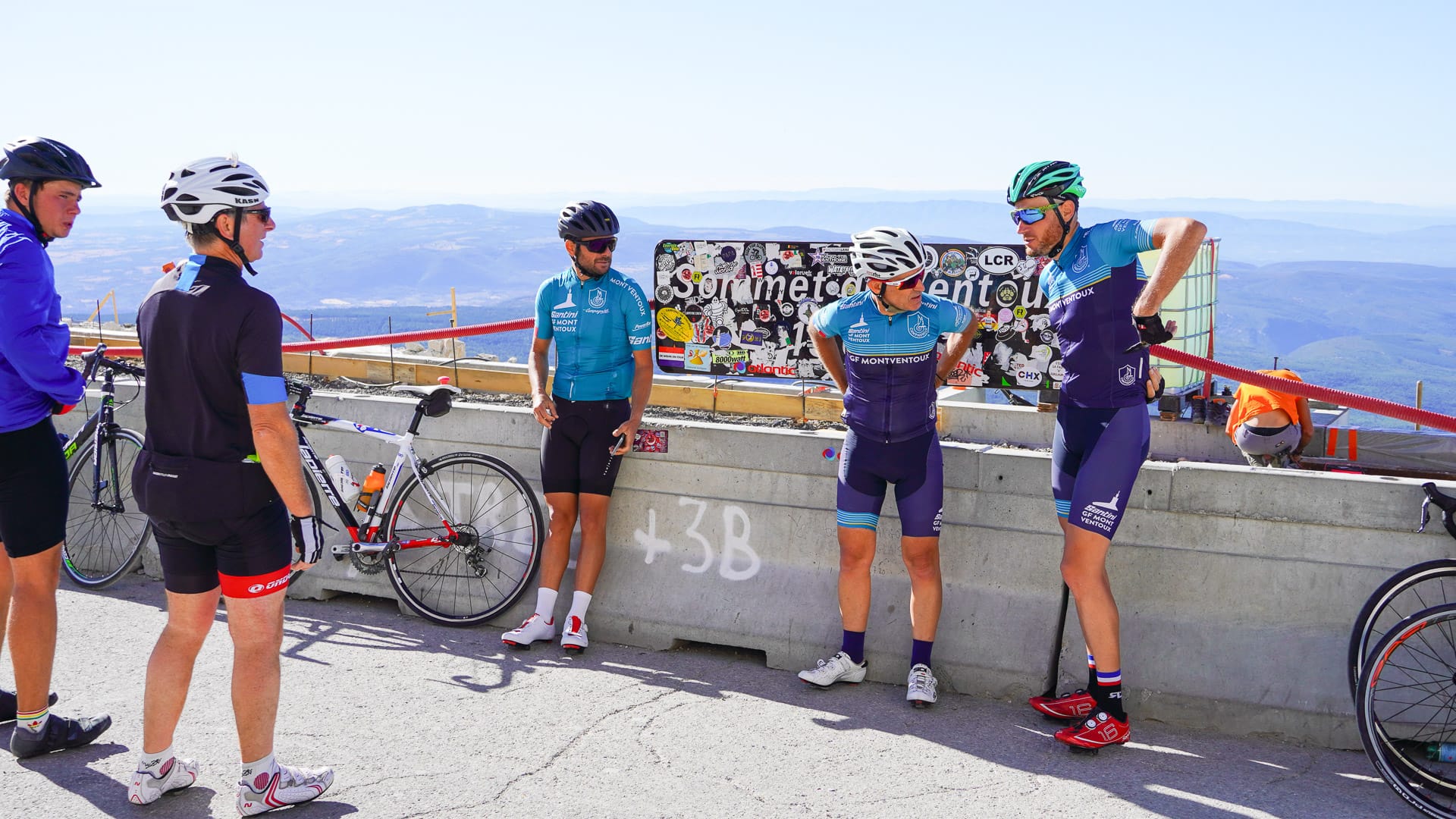
Taking a break at the summit
Let us know your thoughts!
Cycled Ventoux and got some additional tips? Please comment below or drop us a line!
Climbing Mont Ventoux is a big day out, whichever route you choose. It rewards good preparation, sensible pacing and a healthy respect for the mountain.
Pick your weather window, take the right kit and give yourself time to enjoy the ride. Reaching the summit is a brilliant feeling, but getting there safely is what really matters.
Looking for more Mount Ventoux cycling inspiration?
- Cycling Mont Ventoux and Provence: your ultimate guide
- Mont Ventoux from Sault: the must-try gravel cycling tour of Ventoux
- Cycling Mont Ventoux: Malaucène route
- 11 best hotels near Mont Ventoux: accommodation for cyclists near Ventoux + Luberon, France
- Club des Cinglés du Ventoux: Q&A with Ben Davies
- Cycling Mont Ventoux: Bédoin route
- Cycling Mont Ventoux: Sault route
- Cycling in the Alps: an overview of the best Alpine cycling destinations
- 10 iconic Tour de France climbs + tips to ride them
Please support Epic Road Rides
A huge amount of time and effort goes into the article you’ve just read, all with the aim of helping you!
If you found what you’ve read useful, I’d really appreciate it if you dropped something in the tip jar here.
It’s a way you can say thank you and help us carry on creating top quality content with no annoying ads and no pay wall.
Looking for an organised cycling trip?
If you want someone to help you plan and book your cycling holiday, fill out this form. We aren’t a tour operator/agent but we work with lots of people who are and will do our best to put you in touch with someone that can help (within 24 hours where possible)!Clare Dewey is a cyclist with a passion for travel. She set up epicroadrides.com in 2018 to help make it easy for cyclists to explore the world by bike. Today her mission is still inspiring cyclists to discover new places on two wheels - and doing what she can to make sure they have the best possible time while they're there. Clare has visited 50+ destinations around the world, many of them by bike.
Want to connect with Clare? Find her over on LinkedIn.
Last Reviewed: 08 June 2026
First Published: 16 October 2023
The contents of this website are provided for general information purposes only. It is not intended to amount to advice and you should not rely on it. You should carry out your own due diligence and risk assessments and take professional advice. Views expressed by interviewees or other users of this website do not necessarily represent our views. We make no representations, warranties or guarantees, whether express or implied, that the content on our website is accurate, complete or up to date. If you use any information or content on this website, download from, or otherwise obtain content or services through our website, it is entirely at your own discretion and risk. Epic Road Rides Ltd disclaims all liability and responsibility arising from any reliance placed on the information and content on this website. Find out more here.
Comments